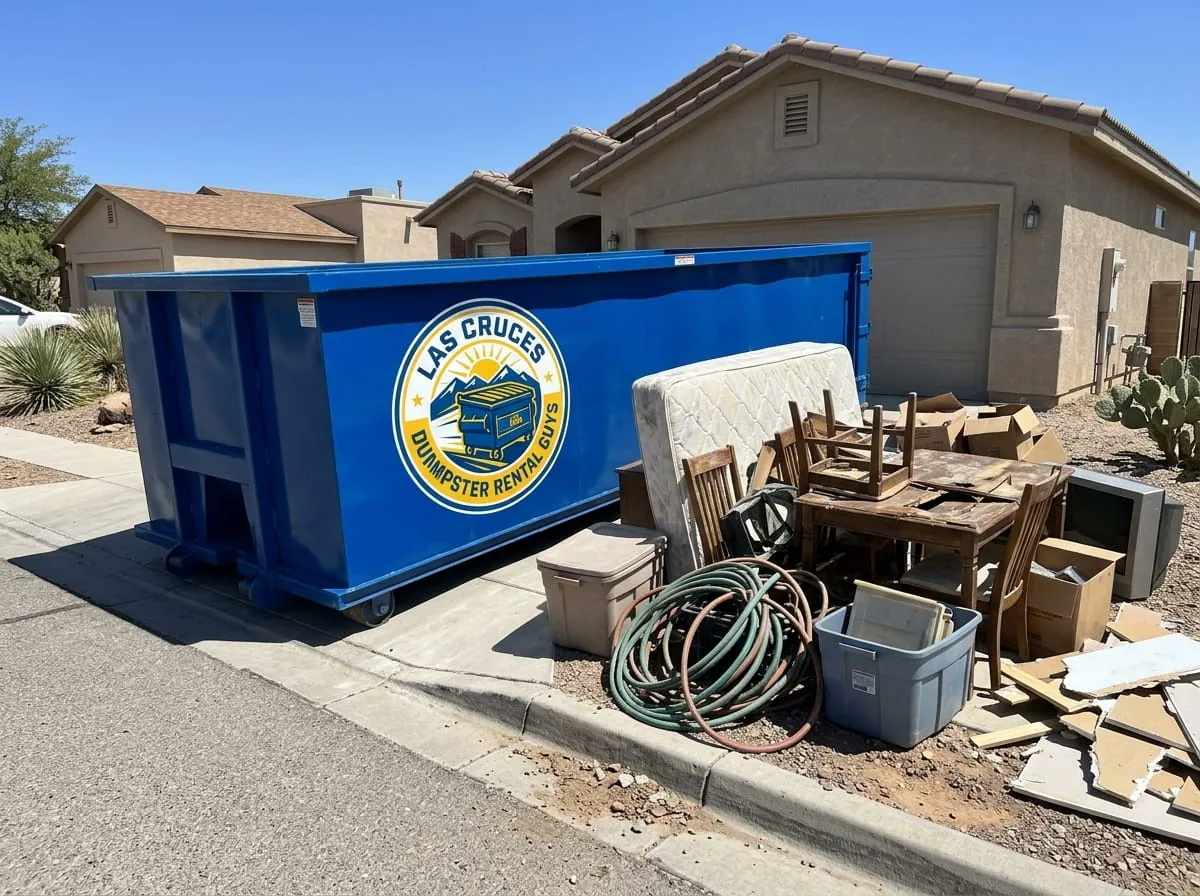
The question I get more than any other, usually over the phone while somebody is standing in their garage looking at forty years of accumulated stuff, is simple: what size do I actually need? The honest answer is that it depends less on how much junk you can see and more on what that junk weighs and how it behaves once it starts stacking. After years of dropping roll-offs on driveways from the East Mesa to Mesilla and out toward Anthony, I've learned that most people guess wrong in one of two directions. They either rent a bin so big it sits half empty and they overpay, or they cram a small one and end up needing a second haul. Let me walk you through the four sizes we run and, more importantly, how to match them to the work in front of you.
The four sizes, and what those numbers actually mean
Roll-off dumpsters are measured in cubic yards, which describes volume, not weight. A 10 yard bin holds ten cubic yards of loose material. That's the part people understand. What trips them up is that a container's cubic capacity and its weight allowance are two completely different limits, and out here in the Chihuahuan Desert, weight is usually the one you hit first.
10 yard roll-off
This is the little workhorse. Roughly 12 to 14 feet long, 8 feet wide, and about 3.5 to 4 feet tall. It holds about the same as three or four pickup loads. The low walls are the whole point: you can walk debris right in over the side without a ramp, which matters a lot when you're throwing heavy material. We steer people toward the 10 yard for small, dense jobs. Think a single-room flooring pull-up, a concrete patio demo, or a modest bathroom tear-out. It fits on a standard Las Cruces driveway without eating the whole thing.
15 yard roll-off
The 15 is the size a lot of folks don't realize exists, and it's often the smart middle pick. A touch longer and taller than the 10, it gives you noticeably more room without jumping to the big-box footprint. It's my go-to recommendation for a serious garage cleanout or a medium remodel where you've got a mix of bulky-but-light stuff and some heavier debris. If you're torn between a 10 and a 20, the 15 usually splits the difference and saves you money.
20 yard roll-off
This is the most rented size in town, and for good reason. About 22 feet long, 8 feet wide, and 4.5 feet tall. It swallows the volume of eight or so pickup loads while still keeping walls low enough to load by hand. Most whole-room and multi-room remodels land here. If you want the full rundown on this workhorse, we keep a dedicated page on the 20 yard dumpster with dimensions and pricing. For the majority of homeowners doing a real project, this is the safe bet.
30 yard roll-off
The big one. Around 22 feet long but a full 6 feet tall, so the extra capacity is all in the height. This is a bulk-volume container, built for light, bulky debris where you need a lot of airspace: whole-home renovations, big estate cleanouts, new construction framing scraps, large landscaping jobs. Here's the catch, and it's a big one in our region. Because the walls are tall and you can pile a mountain in there, it is very easy to overload a 30 by weight long before you fill it by volume. More on that in a second, because it's where people get surprised by their bill.
Volume versus weight: the desert twist
Every roll-off comes with a weight allowance baked into the rate, usually expressed in tons. Go over it and there's a per-ton overage charge, because the landfill weighs our trucks going in. In a lot of the country you can mostly ignore weight and just fill the box. Not here.
Southern New Mexico soil is heavy. If you've ever tried to dig a fence-post hole in Doña Ana County, you already know. Caliche, that cemented hardpan layer of calcium carbonate, is dense and unforgiving, and a small volume of it weighs a shocking amount. The same goes for the stucco and adobe debris that comes off older Mesilla Valley homes. A pile of broken stucco the size of a washing machine can weigh more than a room full of furniture. Roofing tear-off, concrete, brick, tile, and dirt all fall in this heavy-material bucket.
So the rule I give people is this: if your load is mostly heavy stuff, size down and never fill a big bin to the top. If your load is mostly light and bulky, size up. A 30 yard full of framing lumber and drywall is fine. A 30 yard even half full of caliche and stucco will blow past its weight limit and probably can't legally be hauled at all. For dense material we'll often recommend a 10 or 15 yard and just plan on it being heavy but legal.
Real projects, real sizes
Garage cleanout
Old furniture, boxes, a broken treadmill, paint cans, the works. This is bulky but generally light. A 15 yard handles most single-car and two-car garages comfortably. If you're clearing decades of storage or the garage has turned into the household junk drawer, step up to a 20. We handle a lot of these as part of our residential dumpster rental service, and the garage job is probably the single most common call we get.
Bathroom remodel
A full gut of one bathroom produces less debris than people expect, but it's dense: old cast-iron tub, tile, backer board, vanity, drywall. A 10 yard is usually plenty, and the low walls make loading that heavy tile a lot easier on your back. Two bathrooms at once, go to a 15.
Roof tear-off
This is a pure weight job, and the number that matters is squares (a square is 100 square feet of roof). Shingles are heavy, and if you've got a couple of layers coming off, the weight climbs fast. For a typical Las Cruces single-story home, a 20 yard usually covers a standard tear-off, but we rate it by weight and tell you upfront how many squares the allowance covers. Do not judge a roofing dumpster by how full it looks. It'll be at its weight limit while it still looks two-thirds empty.
Whole-home renovation
Kitchen, flooring throughout, multiple rooms of drywall, cabinets, fixtures. This is where the 30 yard earns its keep, because most of that debris is bulky and moderate in weight. The exception is if the reno includes a lot of tile, plaster, or a stucco re-do. Then we might put two smaller bins on rotation instead, so you never overload one and get hit with fees. It's cheaper to swap out a full 20 than to overload a 30.
Estate cleanout
Clearing a full house, furniture, appliances, mattresses, boxes, decades of belongings. Volume-heavy, weight-light. A 30 yard is the natural fit, and the tall walls let a crew keep moving without playing Tetris. For a smaller home or a partial cleanout, a 20 does the job.
Still not sure which one fits your pile? That's what we're here for. Call Las Cruces Dumpster Rental Guys at (575) 449-8691 and describe the project. We'll ask a few questions about the material and give you a straight answer, even if the honest answer is a smaller, cheaper bin than you thought.
How to avoid renting the wrong size
The most expensive mistake isn't renting one size too big. A slightly oversized bin costs a little more but you get the job done in one haul. The real money-loser is going too small on a heavy job, filling it, and then needing a second delivery, second pickup, and second trip fee. When you're genuinely between two sizes, size up on light material and size down on heavy material.
A few practical notes for our area. Make sure you've got a clear, firm spot for the drop, ideally a driveway or a compacted pad. Loose desert sand can be a problem for the truck. Keep about 60 feet of straight clearance so we can position the roll-off, and watch for low mesquite branches and power lines over the drop zone. If the bin is going in the street rather than on your property, some parts of the county and city need a permit, and we can walk you through that.
Load heavy items first and spread them across the floor of the container rather than piling them in one corner. It keeps the load balanced for transport and lets you use the full volume. Never load material above the top rail; anything sticking up over the walls can't be legally hauled and we'll have to knock it down before the truck leaves.
The short version
Small dense jobs, single-room demo, one bathroom: 10 yard. Garage cleanouts and medium remodels: 15 yard. Most multi-room remodels and roofing: 20 yard. Whole-home renovations and estate cleanouts with light, bulky debris: 30 yard. And whenever caliche, concrete, stucco, or dirt is involved, respect the weight before the volume. When in doubt, tell us what you're throwing away and we'll size it for you. You can reach the team through our contact page or by phone anytime.

Founder, Las Cruces Dumpster Rental Guys — sharing straight advice from more than 15 years of local hauling experience.