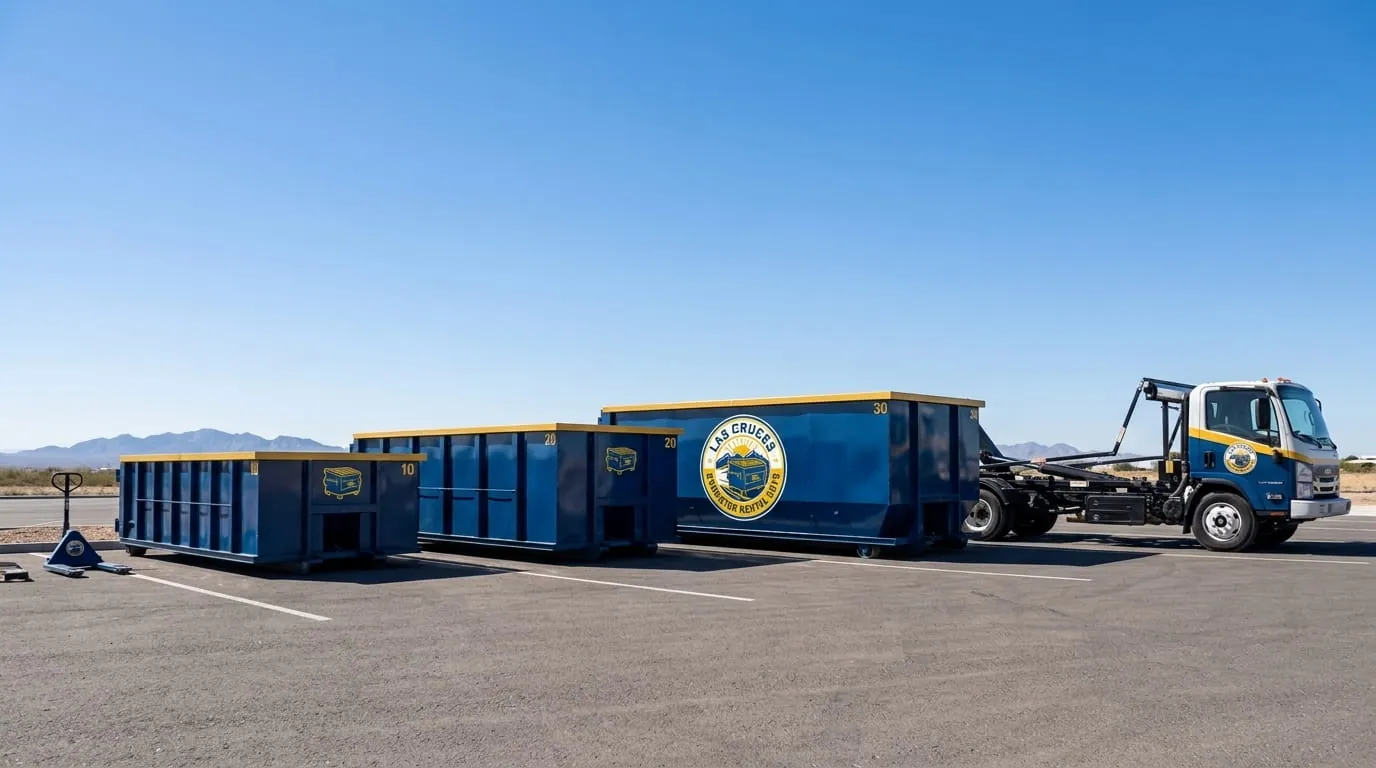
If you have ever stood in the middle of a gutted kitchen in the Mesilla Valley wondering where all the busted-up tile and cabinet carcasses are supposed to go, you are not alone. Construction and demolition debris is heavy, awkward, and around here it comes with a few desert wrinkles most out-of-state guides never mention. Adobe, caliche, and stucco behave differently than the drywall-and-lumber piles you see in a Midwest teardown. Get the disposal wrong and you are looking at overweight fees, a rejected load at the transfer station, or a red tag from the city inspector. Get it right and the whole job runs cleaner and cheaper.
I have been renting containers to contractors and homeowners across Las Cruces and Dona Ana County long enough to know where people trip up. This is the walkthrough I give folks over the phone, just with more detail.
Know what you are actually throwing away
Construction and demolition waste, what the industry calls C&D, is not one thing. It is a dozen materials that each want to be handled a little differently. Before you order anything, take five minutes to mentally sort your pile into buckets. The main players on a Las Cruces job site look like this:
- Drywall (gypsum board): Light and bulky. It crushes down, but a whole houseful adds up fast. Old drywall can hold mold or, in pre-1980 homes, trace materials you do not want to disturb without testing.
- Lumber and framing: Dimensional wood, plywood, OSB, trim. Clean, untreated wood is one of the easiest things to recycle. Pressure-treated and painted wood is a different animal and usually cannot go in a recycling stream.
- Concrete, block, and brick: The heavyweights. A single cubic yard of broken concrete can run 3,000 to 4,000 pounds. This is where people blow past weight limits without realizing it.
- Stucco and adobe: Extremely common on our older and Southwestern-style homes. Stucco carries a wire lath backing that snarls up loads. Adobe is essentially compacted earth, dense and dirty.
- Tile and ceramics: Heavy, sharp, and non-recyclable in most local streams. Saltillo and porcelain both count here.
- Caliche: That rock-hard calcium-carbonate hardpan you hit two feet down in half the county. When you excavate it, it is basically stone.
- Roofing, insulation, fixtures, and metals: The odds and ends. Metal, in particular, is worth pulling aside because scrap yards pay for it.
Once you can see your project in those terms, every decision that follows gets easier: what container you need, how you load it, and what it is going to weigh.
Why concrete, masonry, and caliche need their own container
This is the single biggest mistake I see, so I am putting it right up front. Heavy inert materials, concrete, block, brick, stucco, tile, dirt, and caliche, should almost never go in the same dumpster as your general construction trash. There are two reasons.
First is weight. A standard roll-off is rated for a certain tonnage, and clean concrete will hit that ceiling with the container barely a third full. If you mix it with drywall and wood, you end up hauling a half-empty box that still weighs as much as a fully loaded one, and you pay overage on top of it. It is the least efficient way to move rubble ever invented.
Second is recycling and processing. Clean concrete, brick, and block can be crushed and reused as road base and fill. Local recyclers will take a dedicated load of clean masonry, but the moment you contaminate it with wood, plastic, and gypsum, it stops being recyclable rubble and becomes landfill. That drives your cost up and wastes a genuinely reusable material.
The right move is a dedicated heavy-debris container, usually a smaller 10-yard box specifically for concrete and masonry, sized so the weight works out. Keep your mixed C&D in a separate roll-off. If you are doing a driveway tear-out, patio demo, or excavating caliche for footings, plan on that clean-rubble container from the start. Our construction dumpster rental options are set up around this exact split, and matching the container to the material is half the battle.
Weight limits, and how the desert makes them sneak up on you
Every roll-off comes with a weight allowance baked into the rental. Go over it and you pay per ton for the excess. Those limits exist because the landfill and transfer station charge by weight, and because there are legal load limits for what a truck can carry on the road.
Here is the part that catches Las Cruces folks specifically. Our soil is heavy and dry, and it stays heavy. Caliche and adobe do not lighten up like organic Eastern topsoil. A little excavated dirt riding along at the bottom of a mixed load can quietly add a ton. Wet materials are worse, so if the monsoon hits and your open container takes on rain, that soaked drywall and wood just got a lot heavier. Keep a tarp handy in July and August.
A few rules of thumb that keep you out of overage trouble:
- Break concrete into manageable chunks and load it flat and low, never mounded above the rails.
- Never shovel loose dirt or caliche into a mixed-debris box just to get rid of it. Dirt is the silent weight killer.
- If a load is heavy material, expect to fill by volume only partway. That is normal and correct, not you wasting space.
- Ask up front what the included tonnage is and what the per-ton overage runs. A five-minute phone call saves a nasty invoice.
Separating recyclables actually pays
Recycling C&D is not just a feel-good exercise out here, it can trim your disposal bill. The materials worth separating:
- Clean concrete, block, and brick for crushing into road base.
- Scrap metal — copper, aluminum, steel studs, old ductwork, appliances, rebar. Scrap yards in the area pay for this, so it is worth a dedicated pile.
- Untreated lumber, which can be ground into mulch or reused.
- Cardboard from all the new fixtures and materials, which piles up faster than people expect on a remodel.
You do not need a recycling center on site. You just need a little discipline about where things land as they come off the building. Set up a metal pile, a clean-wood pile, and a clean-rubble container, and let the truly mixed junk go in the general roll-off. On a full renovation that separation can meaningfully shrink what you send to the landfill.
A word on hazardous and prohibited items
Some things never go in any dumpster, and tossing them in can get a whole load rejected. Keep out paint and solvents, adhesives, asbestos-containing material, tires, batteries, fluorescent tubes, and any pressurized or fuel-bearing equipment. If you are working on a home built before the early 1980s and you are disturbing popcorn ceilings, old floor tile, or pipe insulation, get it tested before you swing a hammer. Asbestos abatement has its own legal disposal path and it is not the dumpster.
Not sure how to split your load or which container fits your demo? Call Las Cruces Dumpster Rental Guys at (575) 449-8691 and we will size it with you before you lift a finger.
Keeping the job site compliant and clean
A clean site is a safe site, and in the city of Las Cruces it is also a compliance issue. A few habits keep inspectors happy and neighbors quiet:
- Contain the debris. Loose C&D blowing into the street or a neighbor's yard is how complaints start. Keep the container as your single collection point and sweep the perimeter at the end of each day.
- Mind placement. If the roll-off has to sit on a public street or right-of-way, you may need a permit from the city. On your own driveway or lot you are usually fine. When in doubt, ask before delivery.
- Protect the surface. On a fresh driveway or finished concrete, boards under the container feet prevent scarring.
- Do not overfill. Debris above the rails cannot be legally or safely hauled. If it is mounded, it does not leave until it is knocked down, which costs you a trip.
- Keep the nails contained. A magnet sweep at the end protects tires, pets, and bare feet long after you are gone.
For ongoing commercial builds and tenant improvements where debris is generated week after week, a scheduled swap-out beats a one-and-done haul. Our commercial dumpster rental service handles that recurring flow so your crew is never working around an overflowing box.
Choosing dumpster size: renovation versus new build
Sizing is where the desert Southwest project diverges from the generic advice online. Two scenarios cover most of what we see.
Renovations and remodels
A remodel produces a nasty mix: drywall, old cabinets, flooring, tile, fixtures, and packaging from the new materials going in. The debris is bulky but not always crushingly heavy, unless you are ripping out tile and mortar beds, which many older Las Cruces homes have in spades.
- Single-room remodel (bathroom, small kitchen): a 10 or 15-yard box usually does it, with a separate small container if you are pulling a lot of tile.
- Whole-house interior renovation: a 20-yard is the workhorse. It handles volume without becoming a weight problem, as long as you keep the masonry out of it.
- Roof tear-off: heavy per square foot, so size down on volume and up on weight allowance. Shingles and old built-up roofing are dense.
New builds and ground-up construction
New construction is cleaner but comes in phases, and each phase throws off different waste. Excavation gives you caliche and dirt. Framing gives you a mountain of clean wood scrap and cardboard. Finish work gives you drywall offcuts and packaging. The smart approach is to match the container to the phase rather than dropping one giant box for the whole job.
- Site prep and excavation: dedicated heavy container for caliche and spoil, sized by weight.
- Framing and dry-in: a 30 or 40-yard for the high-volume, lower-weight wood and packaging.
- Finish phase: a 20-yard for drywall, trim scrap, and the endless cardboard.
The bigger 30 and 40-yard containers only make sense for lightweight, high-volume debris. Never order a 40-yard for a concrete job. You will hit the weight ceiling with the box a quarter full and pay to haul mostly air.
The short version
Sort your debris before you order. Give concrete, masonry, and caliche their own container. Respect the weight limits, because our soil is heavier than you think and the monsoon does not help. Pull your metal and clean wood for recycling. Keep the site tidy for compliance and safety. And size your container to the phase of work, not just the square footage.
Do all that and construction debris stops being the headache of the project and becomes just another line item you have under control. If you want a second set of eyes on your load, reach out through our contact page or call and we will walk it through with you. We do this every day across Las Cruces and Dona Ana County, and there is no such thing as a dumb question when a wrong guess costs you a ton of overage.

Founder, Las Cruces Dumpster Rental Guys — sharing straight advice from more than 15 years of local hauling experience.